
HUMAN LEADERSHIP CAPACITY
Helping leaders sustain effectiveness, adaptability, relational connection, and intentional action in increasingly complex environments.
Lee Crockett works with schools, systems, and organisations worldwide to strengthen both human and organisational capacity, enabling cultures of excellence to emerge and endure.
At a glance
Building Human Leadership Capacity in Schools and Systems
- Author of 11 books, including Culture of Excellence, Future-Focused Learning, Mindful Assessment, and Agents to Agency.
- Partner to governments, schools, and organisations in more than 20 countries, including Australia, Japan, and the UAE.
- Recognised by leading researchers, including John Hattie and Anthony Muhammad, for contributions to education leadership and innovation.
- Keynote speaker and advisor on Human Leadership Capacity, cultures of excellence, and leadership in complex environments.
- Based in Kamakura, Japan, drawing on decades of educational leadership, systems thinking, and Zen practice.
The Journey
For more than two decades, I’ve worked with governments, schools, and systems in more than twenty countries.
Across every context, I’ve seen the same reality: leadership is becoming increasingly complex. Expectations rise. Priorities multiply. The pace of change accelerates. Yet the work of leading people, building trust, and creating meaningful change remains as important as ever.
Over time, I became less interested in helping leaders do more and more interested in helping them build the capacity to lead well. That shift in focus continues to guide my work today:
How do leaders sustain effectiveness, adaptability, relational connection, and intentional action in increasingly complex environments?
It is a question that sits at the heart of Human Leadership Capacity and the work I do with leaders around the world.
The Journey
For over two decades, I’ve worked with governments, schools, and systems in more than twenty countries. Everywhere I went, I met capable, caring leaders — working harder than ever, yet feeling more reactive, fragmented, and exhausted.
So I began asking a different question: not “How can we do more?” but “How can we do what matters most — with intention and impact?”
That question changed everything. Today, I help schools and systems redesign leadership culture — transforming it from exhausting to energising, from reactive to intentional.
Because leadership shouldn’t cost your wellbeing — it should strengthen it.
The Work
My work bridges two critical questions facing education today:
How do leaders build and sustain the capacity required to lead well?
How do schools build and sustain cultures of excellence?
Through keynotes, workshops, leadership programs, and long-term partnerships, I help leaders strengthen both human and organisational capacity.
The work spans leadership development, culture, strategy, systems thinking, and organisational change. It is grounded in research, informed by practice, and designed to help leaders navigate complexity with greater clarity, confidence, and purpose.
Different contexts. Different challenges. One underlying focus: helping leaders build the capacity to lead well and organisations build cultures of excellence that endure.
The Work
Through the Culture of Excellence, Intentional Leadership, and Professional Wellness programs, I help leaders and systems embed clarity, trust, and sustainable practices that restore balance and momentum.
Grounded in research and proven in practice, these frameworks blend evidence, tools, and reflection to keep leaders focused and human.
My books, including Future-Focused Learning, Mindful Assessment, and Agents to Agency, are used in schools and universities worldwide and endorsed by leading researchers such as John Hattie and Anthony Muhammad.
Together, these programs and publications form the Excellence Network — a global community of leaders building cultures of purpose, wellbeing, and collective growth.
Every framework, tool, and conversation is designed to keep leaders clear, connected, and human — where strategy and wellbeing work together, not against each other.
The Practice
Whether we are talking about Human Leadership Capacity or a Culture of Excellence, progress often begins by challenging the assumptions we hold about leadership, improvement, and change.
Over the years, I have found three myths that repeatedly shape how leaders and organisations approach their work. They appear sensible on the surface, yet they often become invisible barriers to growth, capacity, and excellence.
-
-
The Myth of Addition — The belief that improvement requires doing more.
In truth, progress is about refinement: the discipline of less, done better. -
The Myth of Attainment — The belief that excellence is a destination.
In reality, excellence is a practice — realised in the moment and deepened as our awareness and capacity grow. -
The Myth of Delay — The belief that meaningful change must wait until conditions are perfect.
In reality, growth begins the moment we choose to engage. The best time to build capacity, strengthen culture, and improve outcomes is almost always now.
-
Excellence is a daily discipline of awareness, intention, and purposeful action.
The Practice
Excellence isn’t about doing everything right — it’s about doing the right things, intentionally. In my work, I challenge three myths that quietly hold leaders back:
-
-
The Myth of Addition — that excellence means doing more.
In truth, excellence is about refinement: the discipline of less, done better. -
The Myth of Attainment — that excellence is a standard to reach.
In truth, excellence is dynamic — our potential realised in the moment, expanding as we grow. -
The Myth of Delay — that excellence takes too long.
In truth, excellence isn’t a future destination; it’s a present discipline.
-
Rooted in Zen practice and systems thinking, this approach balances awareness, simplicity, and purposeful action.
Excellence isn’t a finish line — it’s a daily discipline of awareness, intention, and purposeful action.
The Person Behind the Practice
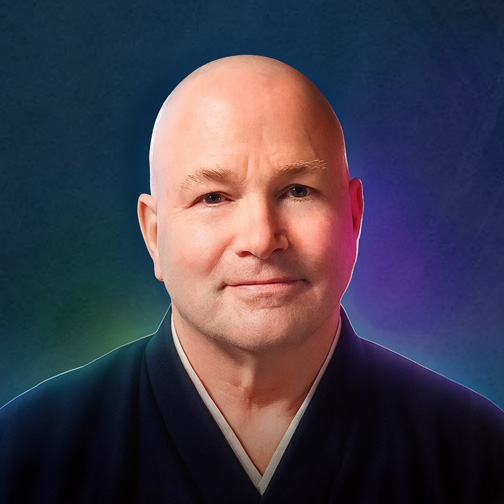
I live in Kamakura, Japan — where the rhythm of the ocean meets the quiet of Zen temples. Ordained at Kenchō-ji, Japan’s oldest Zen monastery, I draw from that spirit of daily practice in everything I teach. Not as a separate philosophy, but as a way of approaching leadership itself.
Leadership asks us to see clearly when situations are complex, choose consciously when priorities compete, act purposefully when everything feels urgent, and reflect deeply as we continue to learn and grow.
See clearly. Choose consciously. Act purposefully. Reflect deeply.
This is what guides my commitment to helping leaders build the capacity to lead with clarity, courage, and conviction in a world that rarely slows down. It’s the practice that keeps leadership human.
The Person Behind the Practice
I live in Kamakura, Japan — where the rhythm of the ocean meets the quiet of Zen temples. Ordained at Kenchō-ji, Japan’s oldest Zen monastery, I draw from that spirit of daily practice in everything I teach.
It’s a modern form of shugyō (修行) — the lifelong discipline of awareness, intention, and purposeful action.
See clearly. Choose consciously. Act purposefully. Reflect deeply.
This is more than philosophy; it’s the practice that keeps leadership human.
It’s what guides my life and my work — helping others do the same: to lead with calm, clarity, and courage in a world of noise.
Let's Start The Conversation
If you’d like to explore working together — through keynotes, leadership programs, or system partnerships — let’s begin the conversation.